Stamping mould is a core production tool used across automotive, aerospace, appliance, electronics, hardware, and structural component fabrication. It governs the dimensional accuracy, surface definition, and repeatability of metal stamping processes. In modern industrial ecosystems where high-volume manufacturing depends on consistency and process stability, stamping mould becomes the foundation upon which production scalability and quality assurance are built.
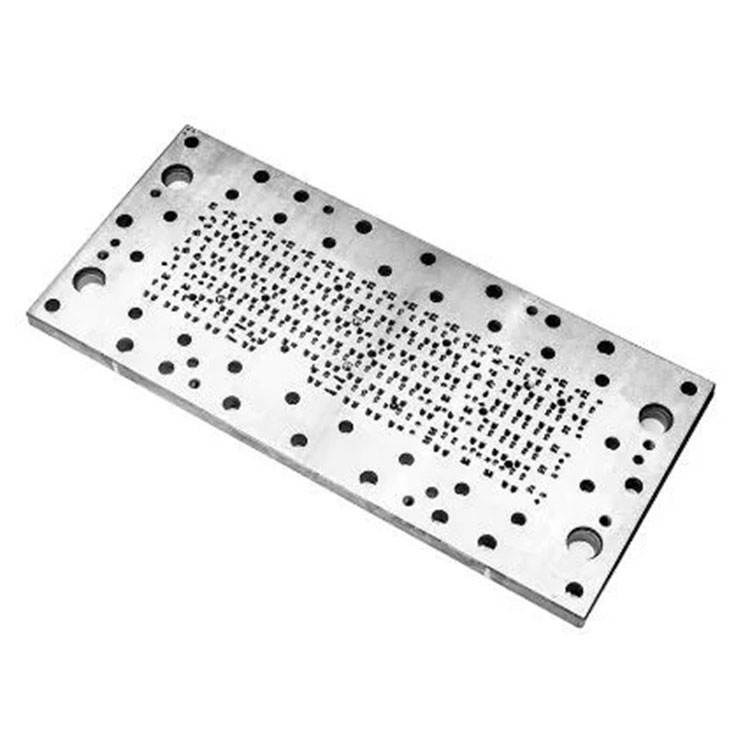
The purpose of this article is to examine how stamping mould precision directly influences forming quality, production lifecycle, and manufacturing performance. Through technical specification analysis, structural breakdown, and process-oriented evaluation, this content provides a comprehensive reference for procurement specialists, industrial engineers, and global buyers seeking to understand the decisive mechanisms behind stamping tool performance. The discussion is expanded into four major nodes to ensure depth and structural clarity, covering material selection, mechanical configuration, process accuracy, daily application considerations, and key evaluation checkpoints for sourcing.
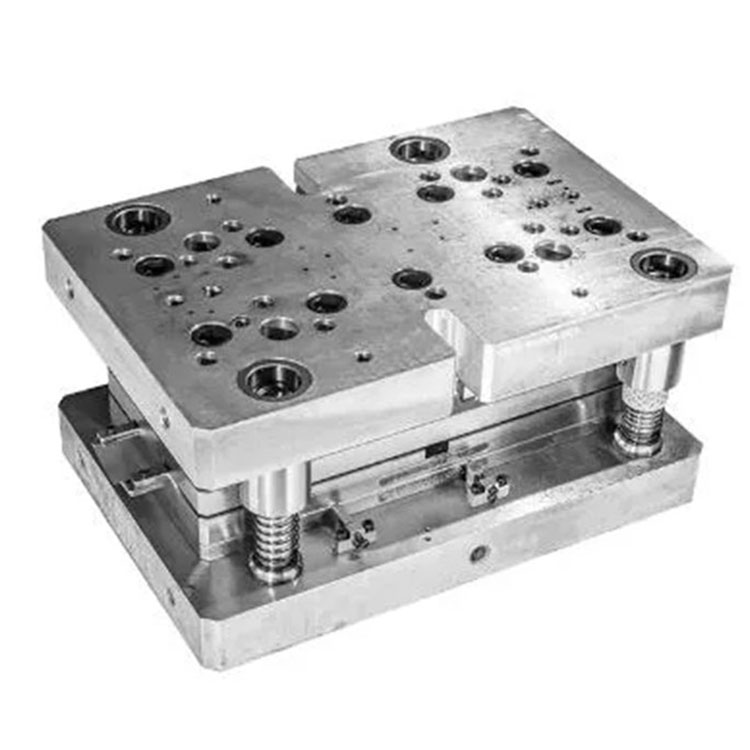
A stamping mould typically consists of die plates, punches, stripper plates, guide pillars, bushings, springs, backing plates, and fasteners. The complete assembly functions as a coordinated structure capable of transferring press force into controlled deformation of metal sheets. Precision machining, cavity geometry control, tolerance discipline, and type-specific configurations (single-process, progressive, transfer, compound) determine the stability of each stamping cycle.
Below is a consolidated parameter reference table representing standard industrial-grade stamping mould configurations commonly used in sheet-metal production environments:
| Parameter Category | Typical Specification Range |
|---|---|
| Die Material | SKD11, DC53, Cr12MoV, Carbide, H13 |
| Hardness (After Heat Treatment) | HRC 58–62 |
| Mould Base Material | S50C, 45#, A3 Steel |
| Plate Thickness | 20–80 mm depending on section |
| Machining Tolerance | ±0.005–±0.02 mm depending on feature |
| Surface Roughness (Critical Sections) | Ra 0.2–0.6 μm |
| Guide Pillar/Guide Bushing Accuracy | Within 0.005–0.01 mm |
| Punch Life (General Steel Sheet) | 300,000–2,000,000 strokes depending on material |
| Die Clearance | 3–12% of sheet thickness (material-dependent) |
| Structure Type Options | Single-Process, Progressive, Transfer, Compound |
| Suitable Sheet Thickness | 0.2–6.0 mm depending on load rating |
With these parameters defined, each subsequent section explores how precise engineering within stamping mould translates into reliable industrial output.
Stamping mould performance begins with the engineering foundation: the materials, thermal processes, and internal architecture of the tool. High-end industrial moulds select alloy steels featuring wear resistance, compressive strength, and dimensional stability. Heat treatment calibrates material hardness to endure millions of repetitive stamping impacts without deformation. Properly tempered punching components maintain edge sharpness longer, improve metal flow behavior, and resist micro-chipping.
Heat treatment quality directly affects long-term mould life. Uniform hardness distribution across the cavity, punch, and working surfaces prevents stress concentrations that would otherwise cause early fatigue. Grinding, wire-cutting, and high-precision CNC milling refine surface geometry to support stable friction behavior. Accurate seating of inserts, plates, and backing structures establishes load uniformity when the press ram applies downward force.
Guide pillar systems determine directional accuracy in mould closing. High-precision bushings allow controlled vertical movement, preventing die misalignment that would cause burrs, accelerated tool wear, or scrap. Springs and nitrogen cylinders regulate stripping force, helping ejected parts maintain geometry consistency. Reinforcement plates distribute impact energy across the mould base, supporting structural longevity during continuous high-speed production.
For industries where tolerances remain tight, minute deviations in die clearance or punch alignment can generate instability across thousands of cycles. Consequently, proper structure design ensures stable dimensional output, reduced maintenance, and consistent stamping performance.
Dimensional accuracy is a defining factor of stamping mould capability. Performance is determined by how consistently the mould maintains cavity geometry, punch alignment, and die clearance during continuous production cycles. Every stamping process produces accumulated wear patterns; therefore, the mould design must anticipate long-term operational stresses.
Tolerance discipline is central to product conformity. Variations of only a few microns in critical sections can alter forming behavior, affecting bend angles, hole positions, flange profiles, and flatness. During high-speed operations, tool steel surfaces encounter frictional contact with sheet metal, making surface roughness and lubrication pathways key determinants of stability.
Progressive stamping moulds amplify this requirement. With multiple stations arranged in sequence, each forming stage depends on accurate strip feeding and precise step progression. If one station deviates from its intended geometry, the final product may exhibit cumulative errors. Transfer moulds require synchronized part movement, meaning punch location and lift mechanisms must maintain smooth travel paths.
Die clearance influences fracture behavior of metal sheets during shearing. Excessive clearance induces burrs and poor edge quality, while insufficient clearance accelerates punch wear. When properly calibrated, clearance delivers clean shearing with minimal tool load. Punch corner radius design also affects stress concentration levels within the mould and the part.
Accuracy further governs thickness distribution during deep drawing processes. Balanced pressure between punch and die prevents wrinkling, tearing, or thinning. For forming operations requiring smooth curvature, the mould’s surface finish and contact consistency determine the visual quality of each output component.
Across global manufacturing supply chains, repeatability defines whether a stamping mould can sustain high-volume orders without variance. High-precision mould engineering therefore becomes indispensable for industries that demand consistency across batches, production lines, and plant locations.
A stamping mould’s lifecycle is influenced not only by its design but also by management practices. Proper evaluation before commissioning, routine maintenance during operation, and structured replacements of wear components contribute to long-term stability.
During pre-production validation, dimensional checks confirm cavity accuracy, punch verticality, die clearance distribution, and guide system smoothness. Fit-up accuracy between plates ensures uniform pressure distribution under load. Engineers conduct trial stamping to evaluate burr conditions, forming transitions, part release behavior, and strip feeding reliability. If anomalies appear, fine adjustments are made to working surfaces, angle reliefs, punch edges, or pilot positions.
Maintenance during operational cycles includes lubrication, punch edge inspection, spring replacement intervals, and tightening of fastening components. Identifying early signs of wear reduces unexpected failures. Monitoring alignment and smoothness of guide pillars prevents angular drift that could compromise precision. Today’s factories often employ production logs to track stroke count, replacement cycles, and defect trends.
Wear components such as punches, inserts, and strippers follow calculated replacement schedules. Regrinding extends service life while preserving geometry. When regrinding becomes insufficient, new inserts restore accuracy. Surface treatments like nitriding or PVD coatings reduce friction and strengthen wear resistance, improving stamping stability under high-speed or high-load conditions.
Production planning also shapes mould efficiency. Selecting the appropriate structure—single-process, progressive, transfer, or compound—determines whether output speed aligns with order volume and part complexity. Matching mould capacity to the press machine ensures balanced force distribution and avoids overloading.
Well-managed moulds deliver long operational life, lower scrap rates, and stable conformity across thousands or millions of strokes. For procurement departments, understanding lifecycle management provides a foundation for evaluating supplier capabilities and projecting long-term operational cost efficiency.
Manufacturing teams depend on selection criteria that align mould specifications with production objectives. Evaluating stamping moulds requires an analysis of sheet-metal characteristics, component geometry, tolerances, and press-machine compatibility. Each part’s forming requirements dictate whether a progressive, transfer, or single-process mould is appropriate.
Poorly matched mould types hinder productivity. For example, high-complexity components requiring multiple stages benefit from progressive structures, while large structural parts may require transfer configurations. Simple holes or cuts may use single-process stations for cost efficiency. Engineers must assess thickness, tensile strength, and bending characteristics of the metal to determine appropriate clearances and punch strength.
Troubleshooting during production involves diagnosing burr issues, part deformation, material spring-back deviations, or feeding misalignment. Burrs commonly indicate incorrect clearance or punch wear. Deformation often results from unbalanced pressure distribution or inaccurate die surfaces. Spring-back requires adjustments to forming geometry, transitions, or bending angles. Feeding issues stem from strip guide misalignment, pilot inaccuracy, or inconsistent material coil properties.
Engineers maintain documentation for each mould, recording modifications, refurbishment intervals, and operational statistics. Detailed logs support traceability and allow long-term optimization. When scaling production, teams assess mould interchangeability to ensure replicated output across different plants. Standardizing components such as guide pillars, springs, and bolts enhances predictability during part replacement.
Internal audits examine hardness uniformity, structural fastening stability, cavity geometry consistency, and strip travel paths. These practices ensure stamping moulds remain stable even under continuous high-speed operations.
Below are two commonly referenced questions in stamping mould selection and application:
Q1: How is die clearance selected for different metal sheets?
A1: Die clearance depends on sheet thickness, tensile strength, and forming characteristics. Harder materials require slightly larger clearances to prevent punch fatigue, while softer metals may use tighter gaps for cleaner shearing. Engineers typically reference clearance percentages ranging from 3–12% of sheet thickness, adjusting based on observed burr levels, punch wear progression, and edge deformation tendencies.
Q2: Why does progressive mould accuracy affect final part checks?
A2: Progressive moulds rely on precise step-feeding, with each station influencing subsequent forming stages. If one station deviates in profile, feeding misalignment or geometry errors accumulate across the strip. This leads to positional inaccuracies, dimensional drift, or incomplete forming. Continuous accuracy across all stations ensures each stage complements the next, producing consistent parts at high volumes.
Stamping mould selection and troubleshooting therefore require detailed technical understanding, structural awareness, and diligent process observation.
Industrial stamping relies on moulds engineered with precision, durability, and operational stability. From material selection and structural integrity to dimensional accuracy, lifecycle management, and process troubleshooting, every element of mould engineering contributes to consistent forming results. Manufacturers seeking reliability across long production runs depend on moulds that maintain geometry under continuous pressure. Procurement teams benefit from understanding the evaluation criteria that differentiate well-engineered moulds from unstable ones.
For organizations requiring robust mould solutions, LEO Industrial Co., Ltd. offers manufacturing expertise supported by advanced engineering capabilities and strict process control. To obtain technical specifications, request a quotation, or discuss custom mould development, contact us for further consultation.